Grow log · my own notes app
my-vault
An Obsidian of my own, grown over five weeks of evenings. I use it every day, so every annoyance turned into a feature request the same evening.
- requests typed
- 80
- commits
- 64
- days with work
- 13
- first to last prompt
- 8 Oct – 15 Nov
8 Oct27 Oct15 Nov
27 a day at most
The seed
8 October 2026, the first prompt
I want to create an obsidean-like webapplication to write my notes and have them available in the cloud. I should be able to:
- create folders
- create notes in markdown
- render the markdown
- upload images to use in the markdown.
- find out if the "text" model on "vonk" has the ability to do github-copilot style text completion (complete as i type)
- allow me to use the image model on vonk to generate images […]
- instead of a database to store the articles, I want a vault to be a folder on the server with an optional git repo and remote included
- Adding resources that dont exist (images, links to other files, etc.) will add an entry to a "todo" list for that particular markdown file.
Ask me questions before you proceed
One long wish list, and the request I now put under most plans.
How it grew
-
8 October
A notes app in a day
Nineteen commits on day one: vaults as folders, ghost text from vonk, Mermaid and admonitions, an assistant panel, scripts in sandboxed frames, a phone layout, a token login and a production server.
Make the left(folders) and right(todo and synch) panels hideable and allow me to drag the separators between the panels to give them more space.
I want to be able to run p5 sketches in my markdown.
i want this app to present me a meaningful mobile interface so i can make notes on the go and use it on my tablet.
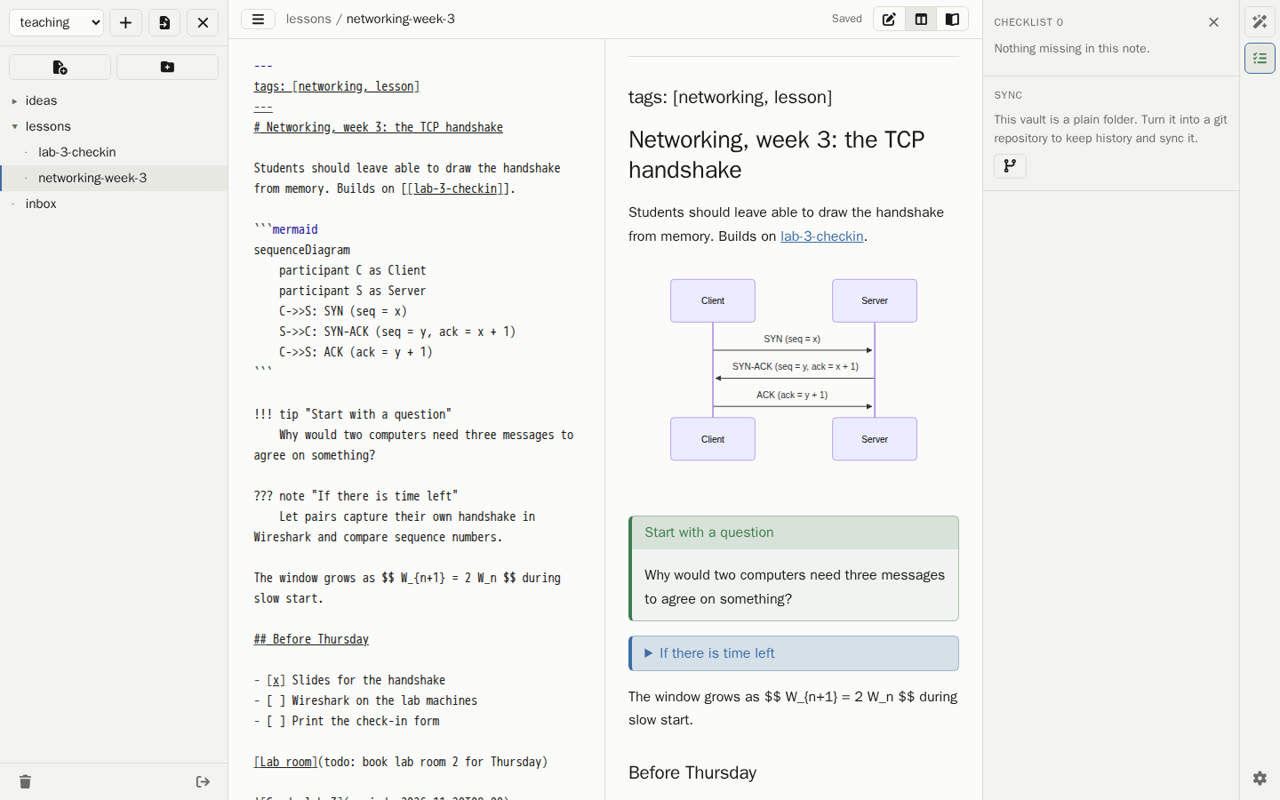
Day one: Markdown beside its preview 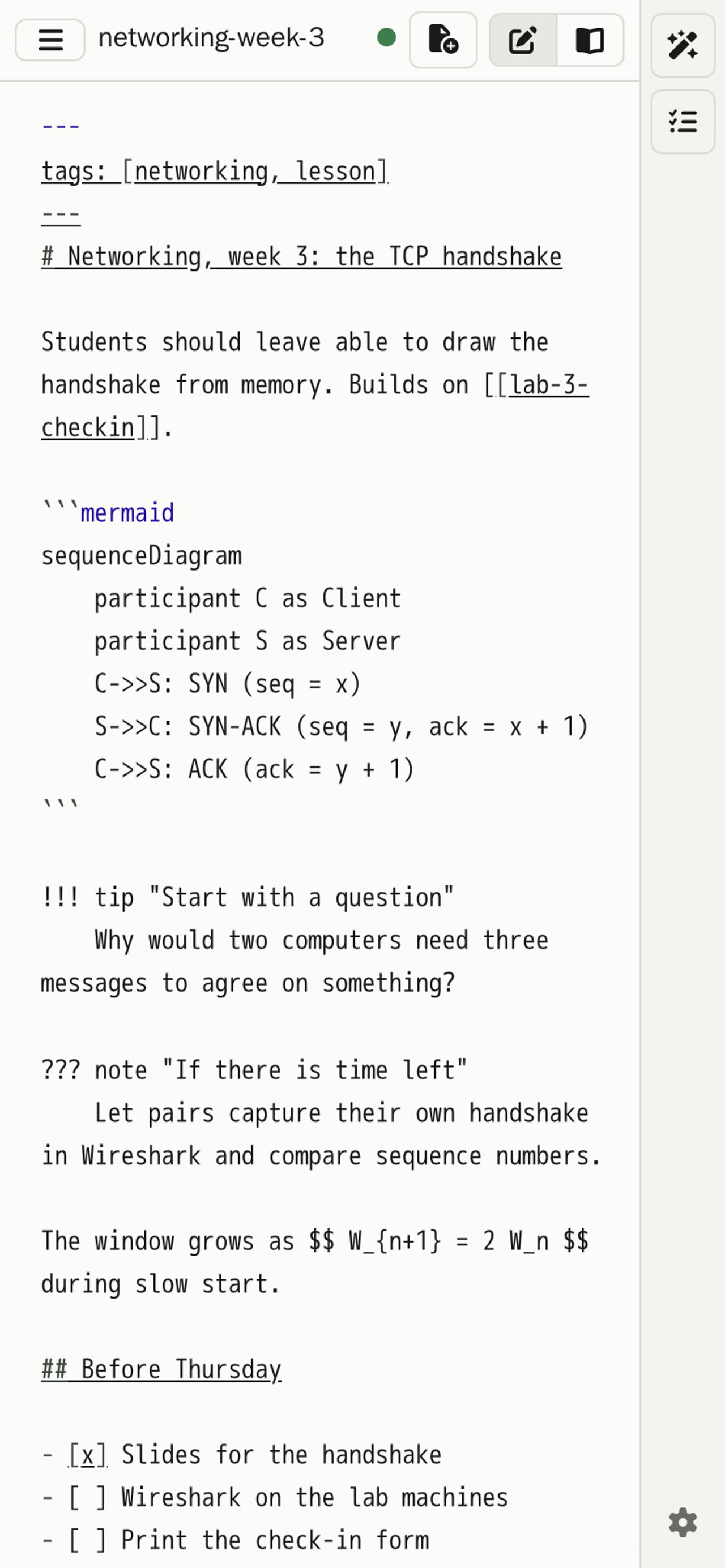
The same vault on a phone -
8–10 October
An assistant that keeps working
AI replies became server-side jobs that survive a closed tab, and edits became diffs. Then a burst: search, maths, backlinks and a graph, tags, dictation, and ||secrets|| that never reach the language model.
implement ai generation as a server-side job so generation continues after a conversation lost focus
implement small changes to a document as diffs rather than rewriting the entire document.
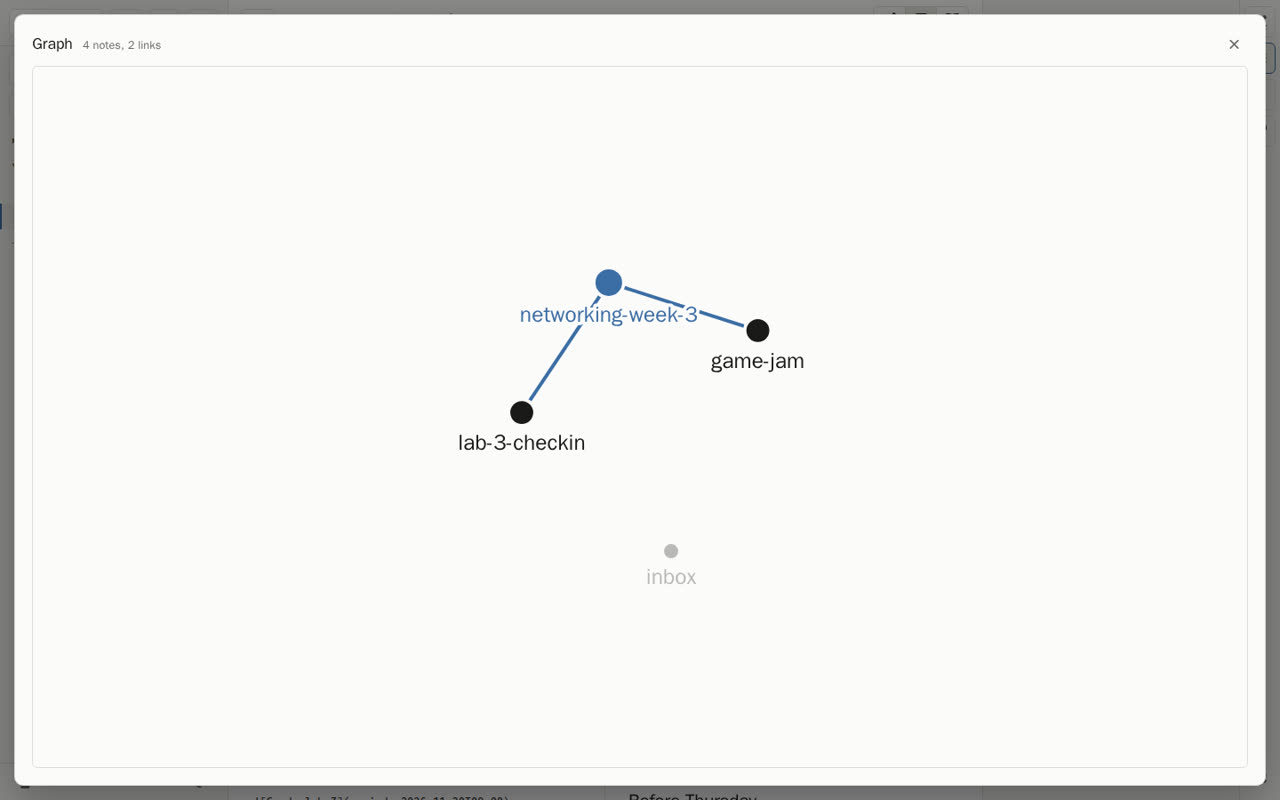
The graph of linked notes -
10 October
Shipping on every push
Tests run on every push, the build server builds the images and rolls main out to production. A ? button shows the version and what changed.
-
13–14 October
Notes from the phone
Photos straight from the camera, changes from another device without a reload, embeds, and reminders that arrive as notifications.
Allow me to use my device's camera to insert images into documents
A "reminder": A text and a date-time that will send a notification at the given time
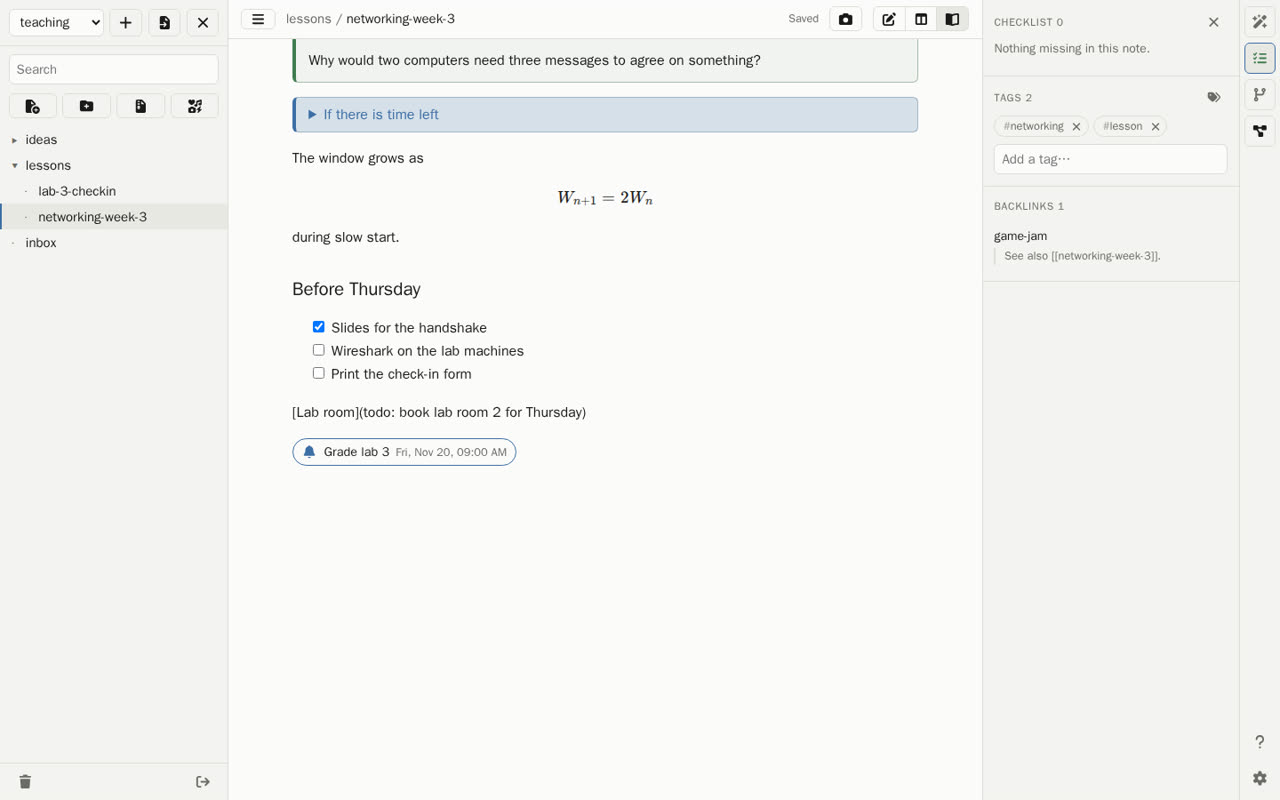
A reminder, written in the note itself -
14–15 October
Pruning
App.jsx split into hooks with one concern each, markdown.js into one plugin per extension, every model call behind one module, every dialog one component.
Analyse the current codebase and suggest ways to refactor it in the tradition of the SOLID principles
-
18–20 October
Publishing and todos
A read-only link for any note, todo items inside the text, ticked off in the preview, with a comment on how each was solved.
Allow me to mark specific documents as "published". I will get a link that opens the rendered version of that specific document without the need to authenticate.
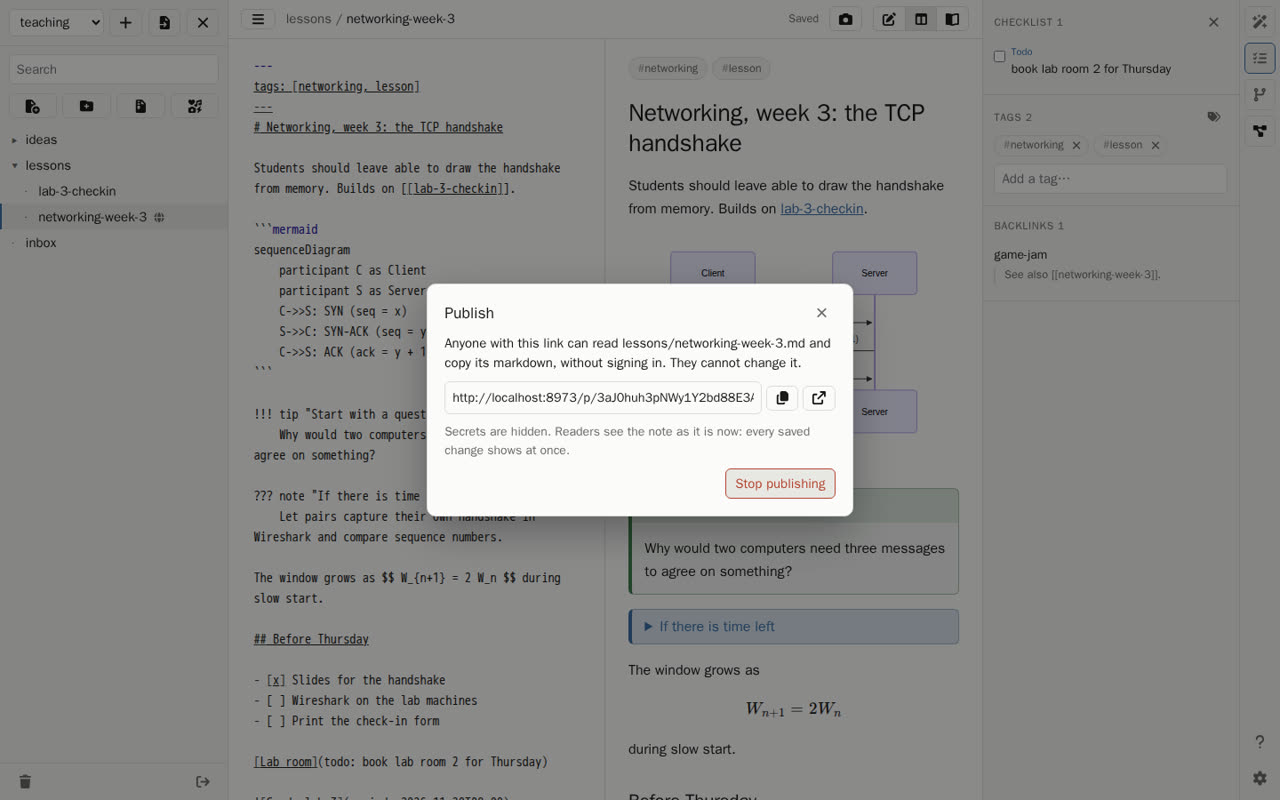
Publishing a note 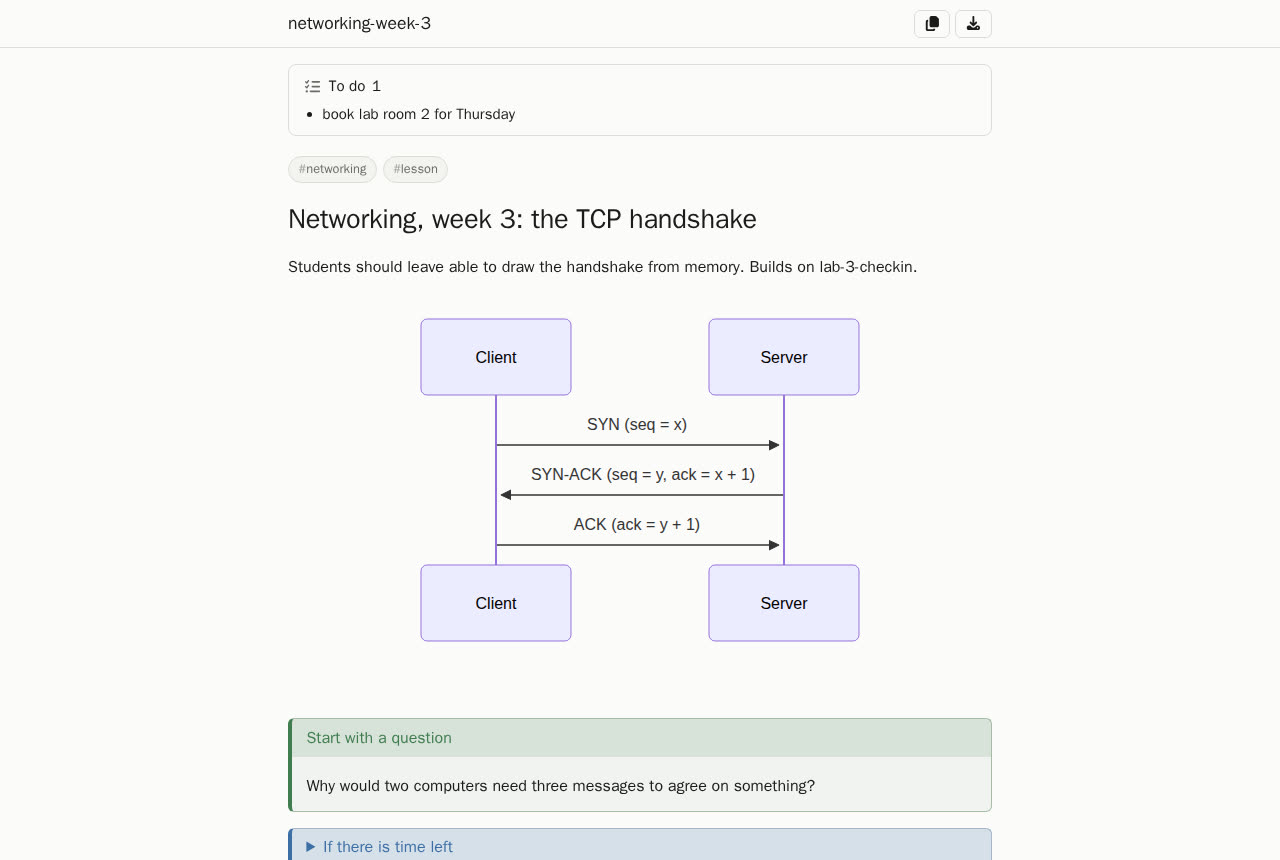
The published page -
6–7 November
Cross-pollination
Forms and the PDF export came over from noted. Help pages for every extension, and the assistant's prompt built from those same pages.
Make sure each change/addition will propagate to the system prompt and the help pages
allow me to save published files and forms to pdf. Use [noted's] pdf renderer code as reference.
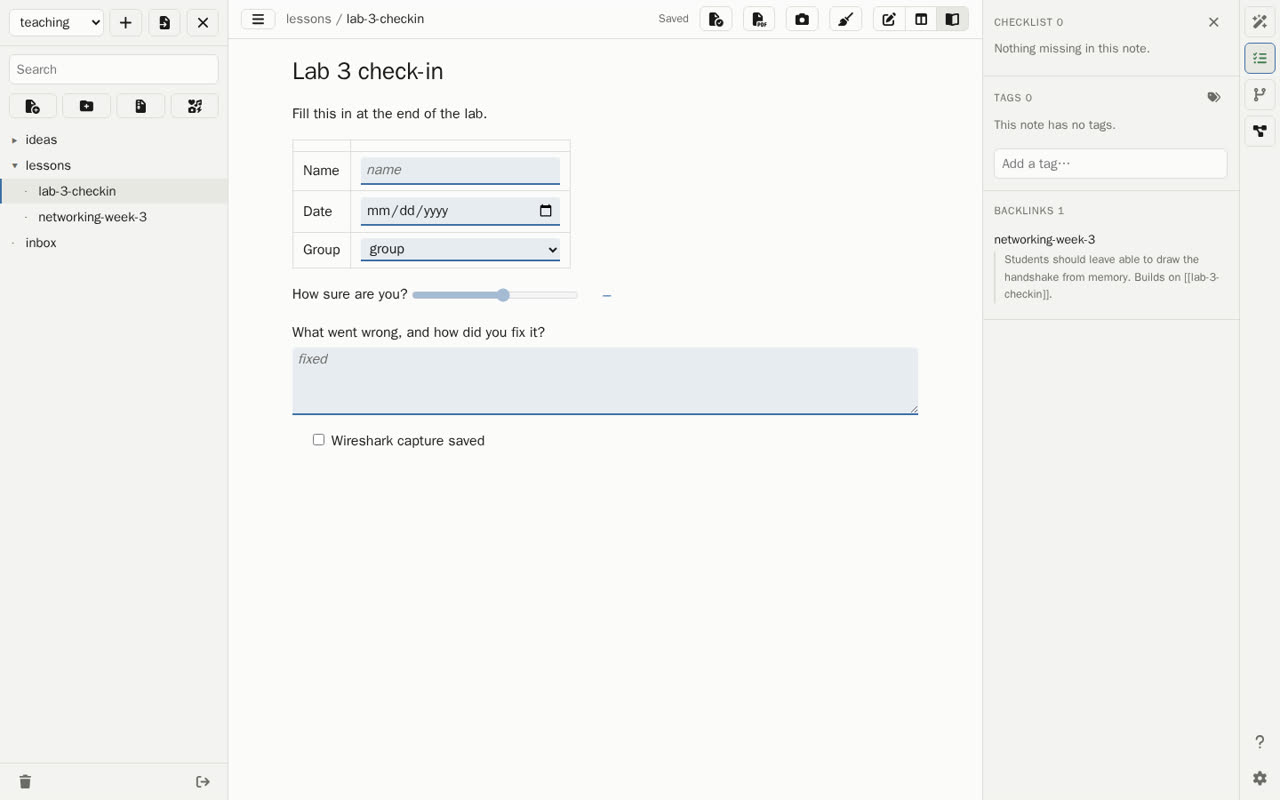
Forms, borrowed from noted 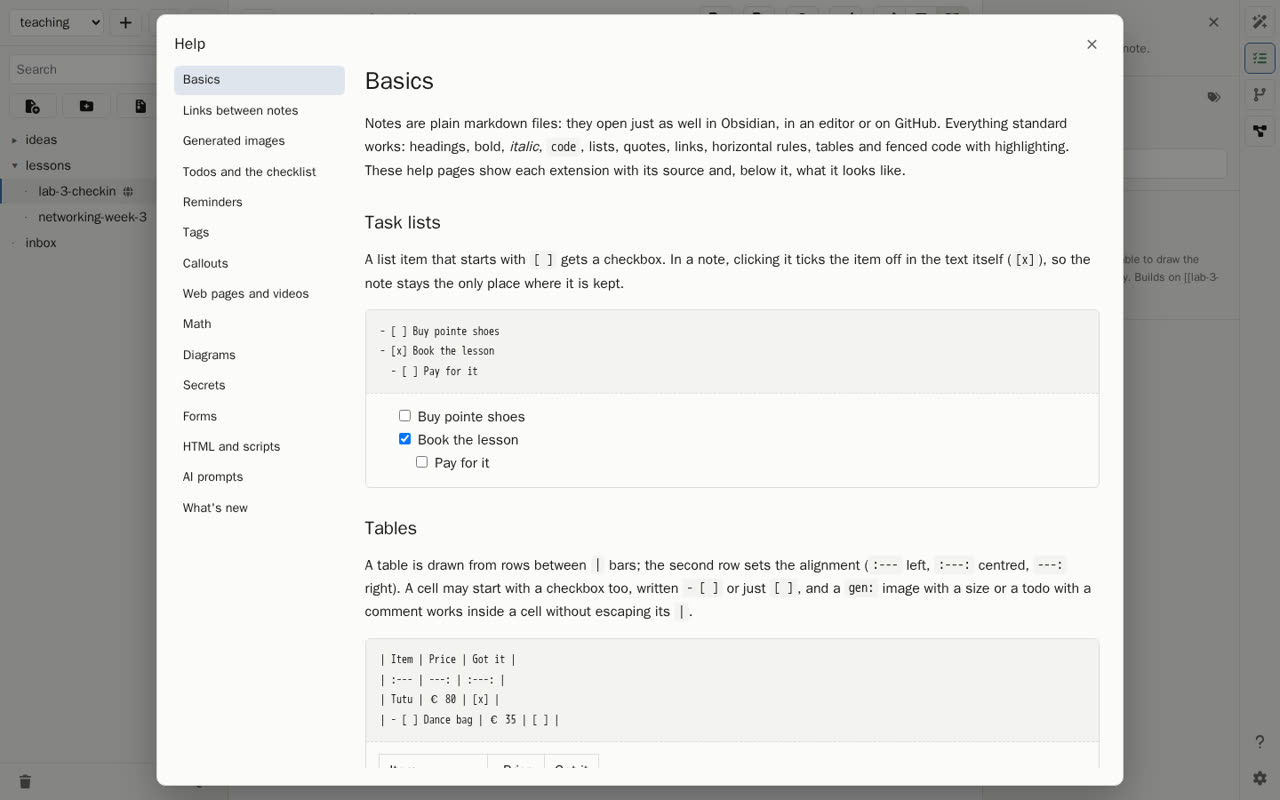
Help pages -
13–15 November
A note an agent can read
Published notes became my way to hand screenshots to Claude Code. So every published note got a JSON link an agent can read.
I often use published notes to show my agent images and other text that is hard to type in the terminal. It has trouble reading the note directly because it needs to run javascript.
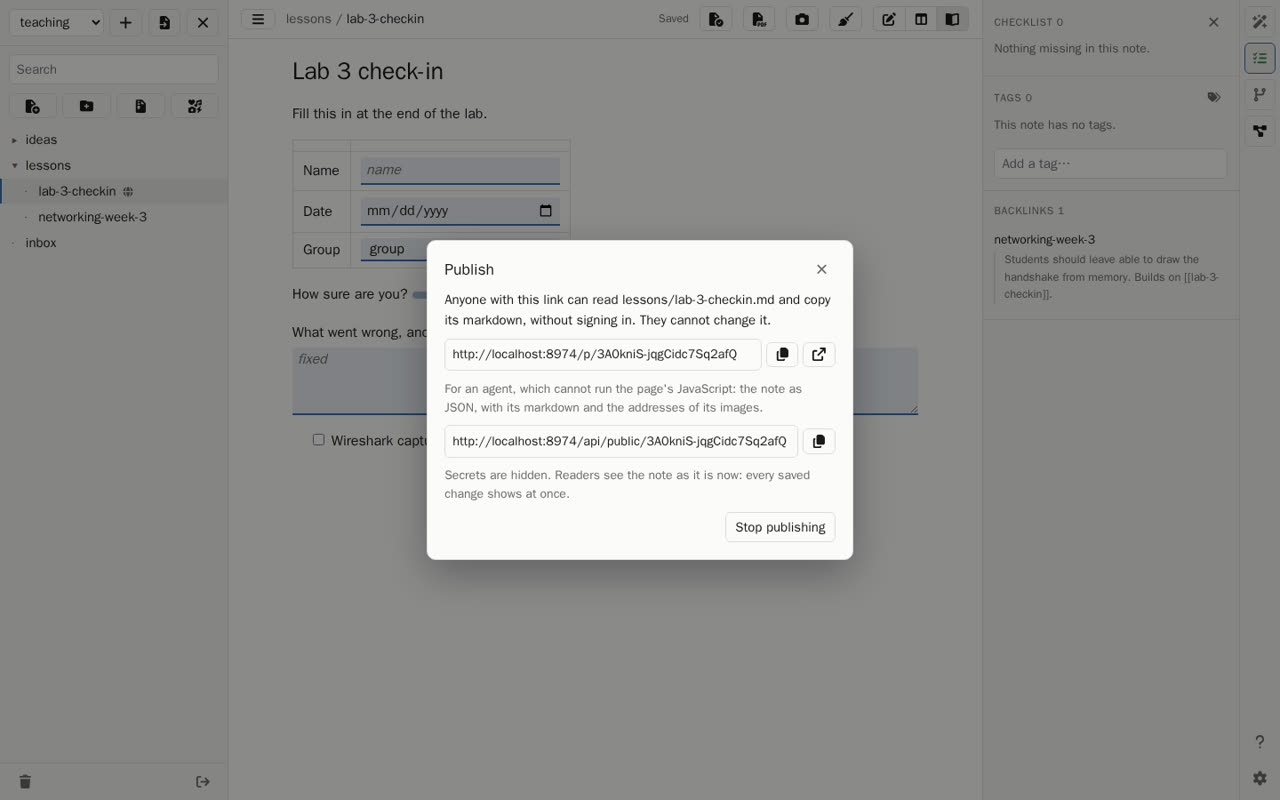
A link made for an agent to read
Tending for quality
Ask before building
The first prompt ends with "Ask me questions before you proceed". The answers shaped the vault-as-folders design.
Tests on every push
71 test files. A push to main runs them on my own build server, builds the images and deploys.
A SOLID pass at week two
Before the second wave of features, the code was split along its seams.
Security as a habit
"dont commit any api-keys or specific urls" on day one; a token login, security headers on every route, secrets masked from the model.
Docs that feed the assistant
One set of help pages explains the extensions to me and to the AI, so they never drift apart.
A CLAUDE.md of 1,000 lines
Every decision and gotcha written down, so the next session starts where the last one ended.