Grow log · homework, at home
Algebra Cleanup
A tile game for simplifying algebra that grew, in ten days, into a small algebra system: equations, a skill tree, goniometry, logarithms, derivatives. Almost every request came from playing it.
- requests typed
- 30
- commits
- 48
- days with work
- 7
- first to last prompt
- 5 Nov – 15 Nov
5 Nov10 Nov15 Nov
24 a day at most
The seed
5 November 2026, the first prompts
add a docker compose configuration and make this application available through [my network] using caddy
Make it a progressive web app
/be-ambitious Make this application useful for more types of algebra problems
A single-file prototype came first. The first prompts put it online; the first real feature request asked for more ambition.
How it grew
-
5 November
Online the same day
Served, installable, and the first bugs reported from play, one of them as a published note with screenshots.
When animating the movement of the tiles when performing bracket operations, sometimes I see a stray tile move in the lower-right corner
When multiplying fractions lead to 1/1, leave that 1/1 and let the player cancel out the 1s
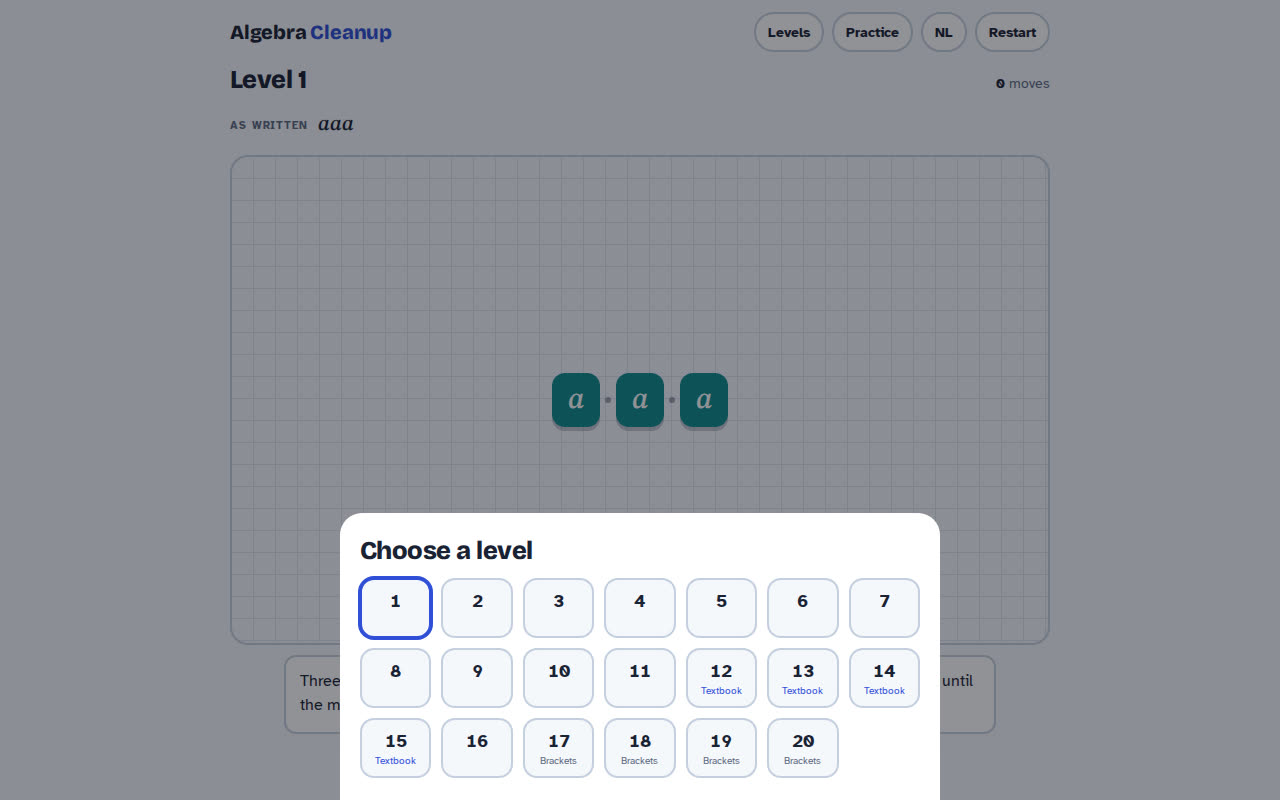
Day one: twenty levels 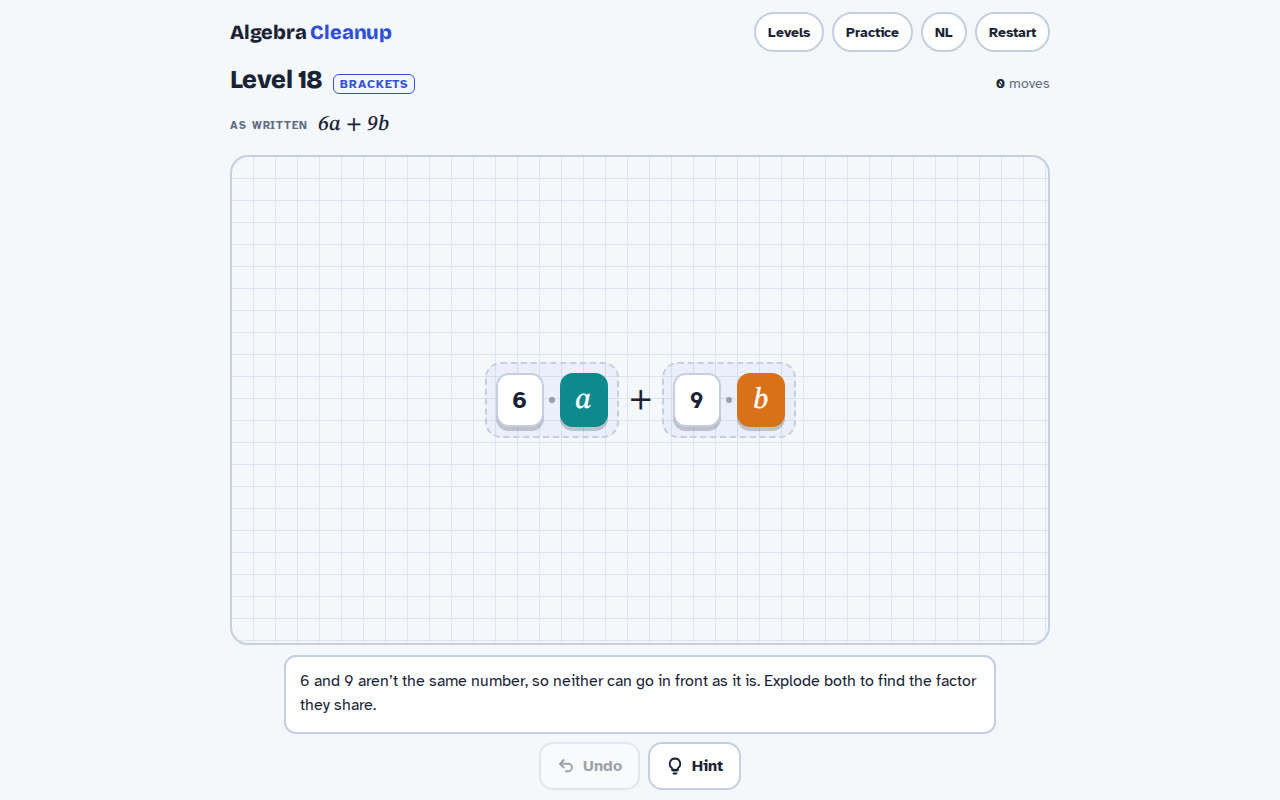
Level 18: tidying brackets -
6 November
Be ambitious
The rest of the second- and third-year algebra chapters, and problems students type themselves. Then playing the levels, and getting stuck.
Level 26 asks for a -x to be split, but the interface doesn't let me.
What is the difference between "split" and "explode"? It doesnt make sense for an average user?
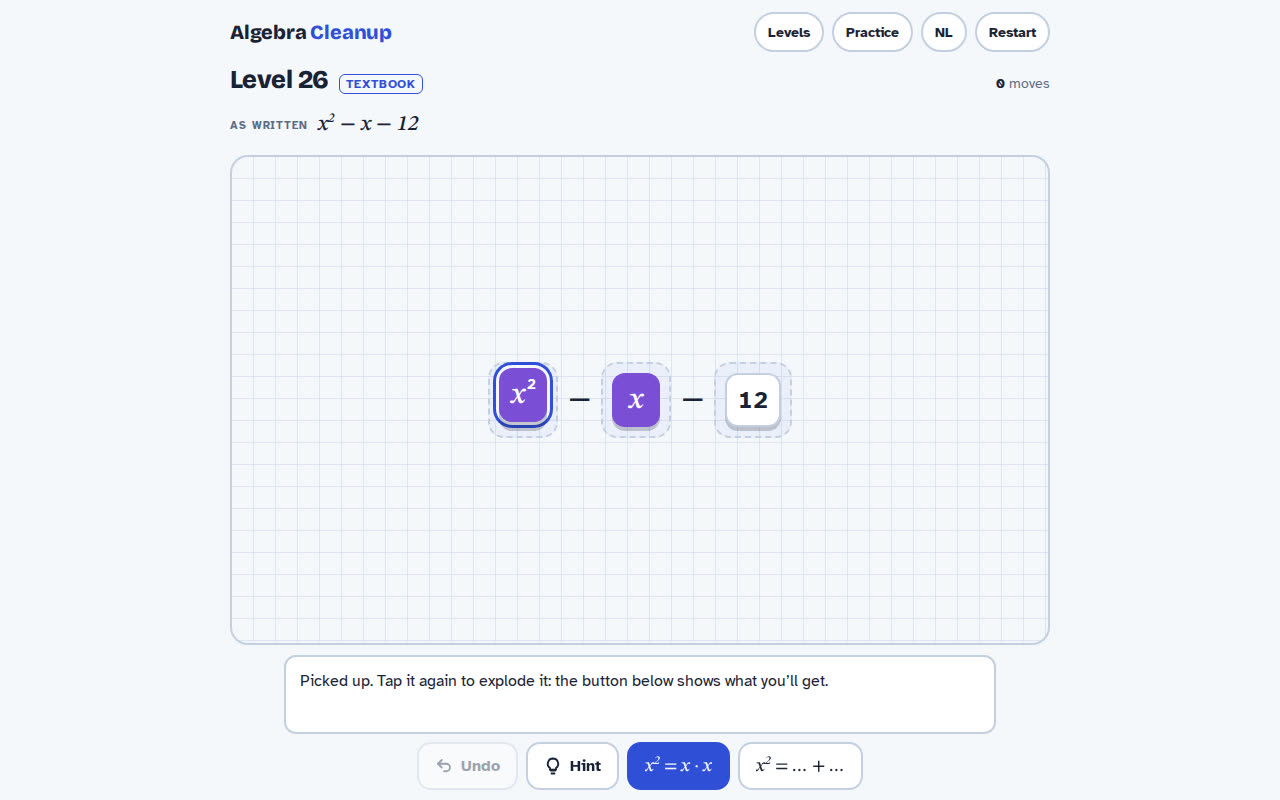
Buttons that say what they do -
7 November
Balancing equations
Tap = to do the same to both sides, drag to balance, quadratic equations that branch.
/be-ambitious i want to be able to solve equations by balancing left andvright sides
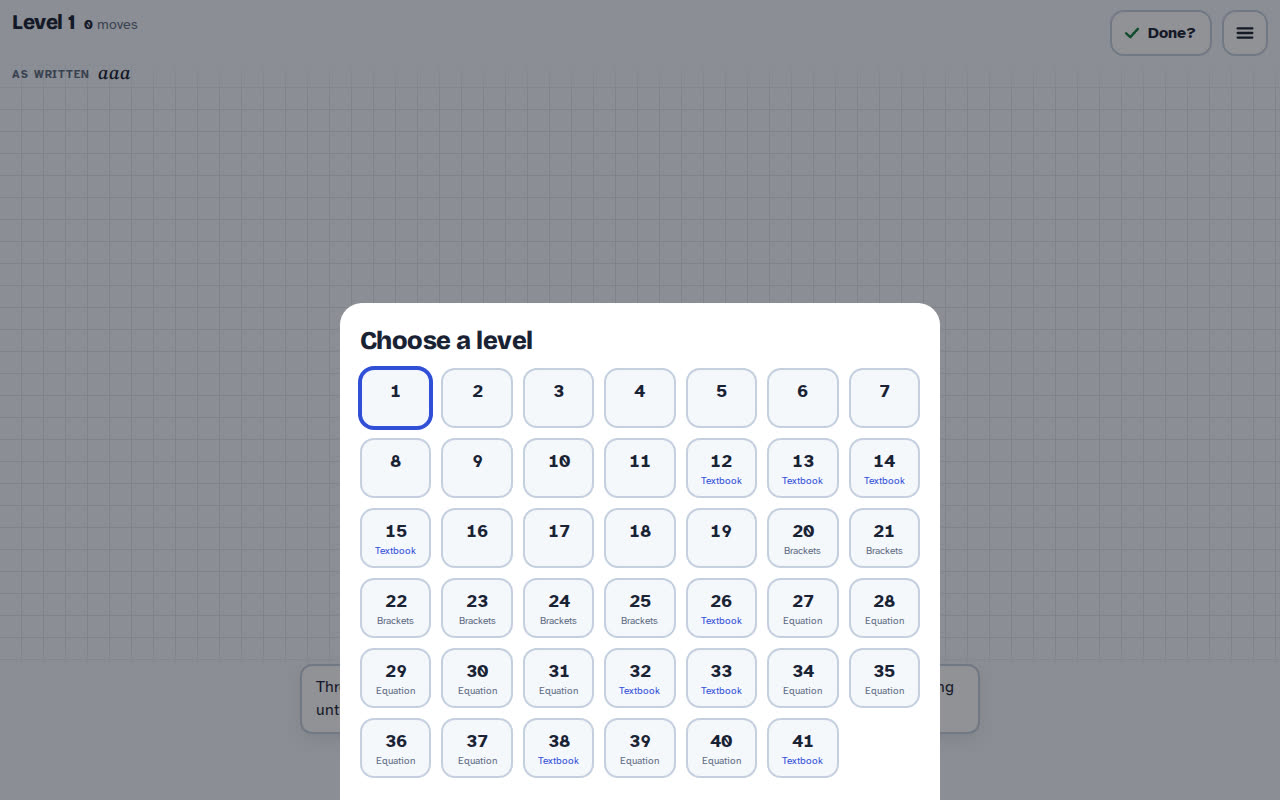
Forty-one levels 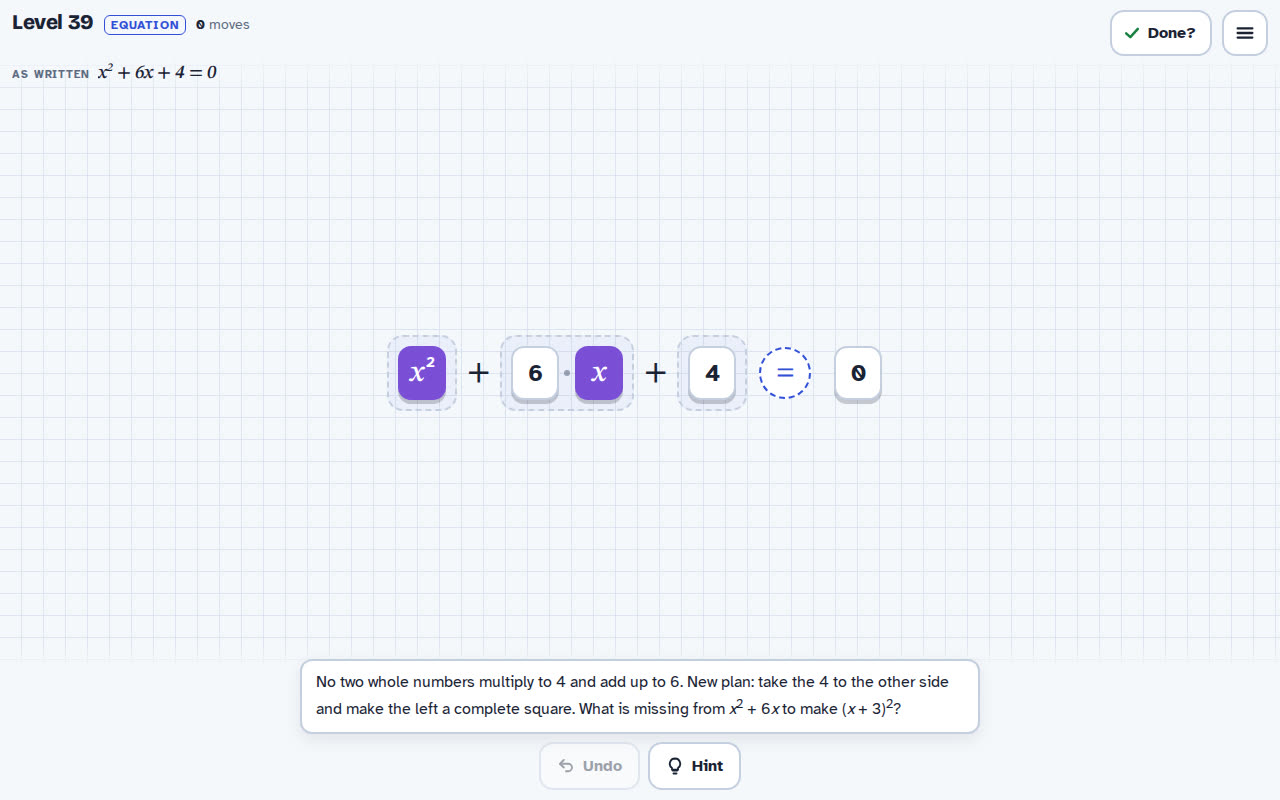
Level 39: a quadratic, balanced step by step -
8 November
Playtest notes
A list of what felt wrong, fixed in one go, and generic forms like ax + b = cx + d.
Typing something to add an operation to both left and right sides makes the dialog obfuscate the whole formula. Find a way to make adding an operation more intuitive without the need to use the keyboard. Maybe selecting an operation and use a slider to pick the number.
-
8 November
Refactor before it grows further
A plan in eight steps on a branch. Step 0 recorded the hints for every level as golden traces, so each later step could prove nothing changed. Step 8 added logarithms as the test of the new seams.
Currently this application has grown from a simple game to a whole algebra-system. In hindsight some design decisions would have been made differently in the beginning order to accommodate alle new features. […] What would you have done differently in the design of the application to make it extendible. Use SOLID principles.
Commit step 0 to a refactoring branch and go ahead with step 1 and subsequent steps. Commit each step to the branch
-
8 November
A skill tree of mathematics
Levels became skills on a map: goniometry, exponents, inequalities, complex numbers, logic, derivatives.
I want to cover more of mathematics, for instance goniometric functions and eventually differential and integral calculus and differential equations. Everything should follow the same basic rules. The linear level system should become a skill tree
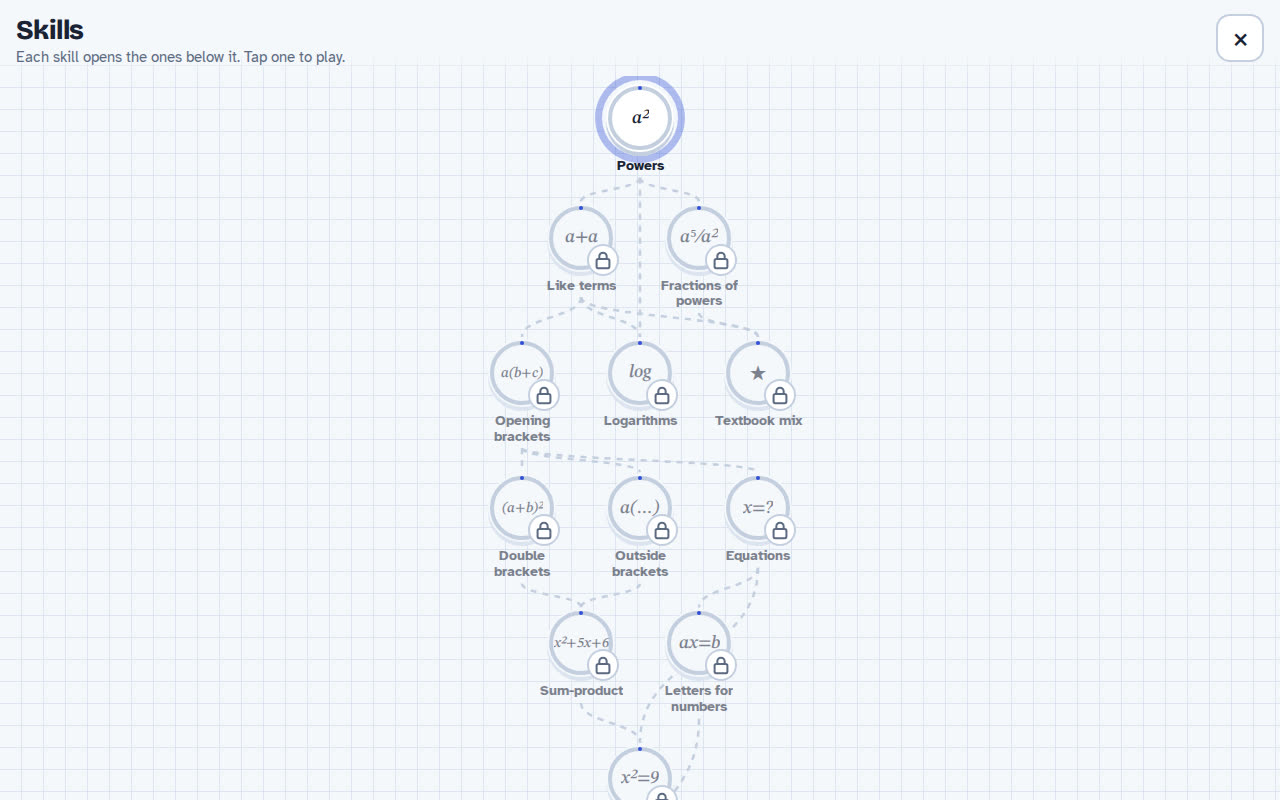
The first skill map, still locked 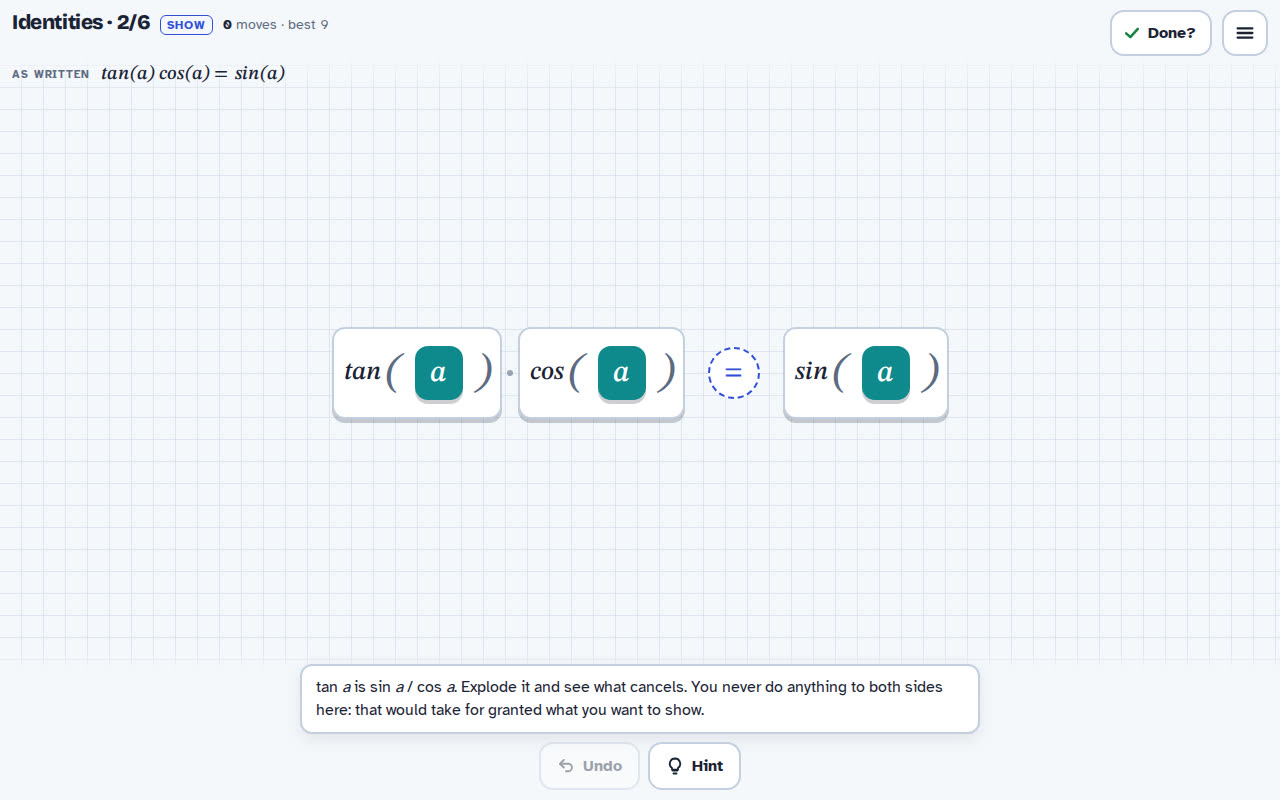
Trigonometric identities 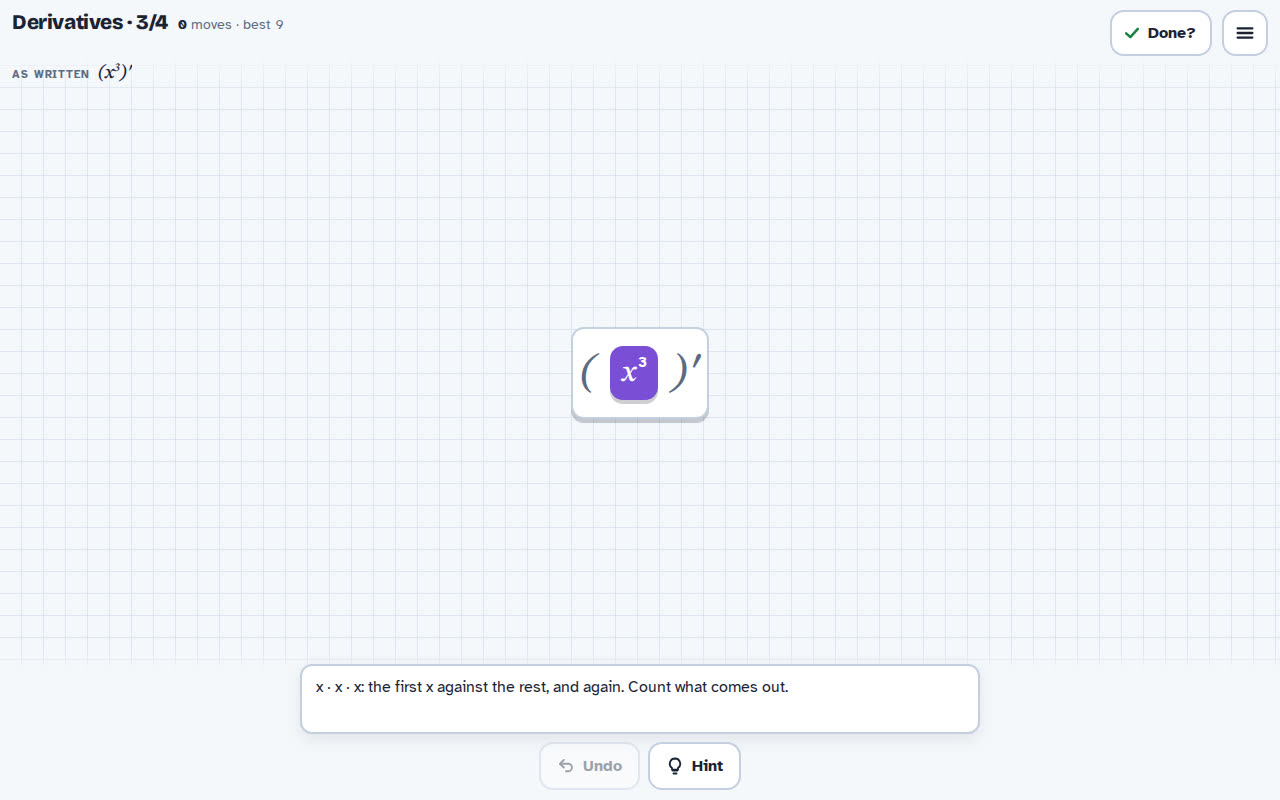
Derivatives -
13–15 November
Pruning by playing
Fewer lines in the skill tree, slower steps where students need to see them, and a written-up list of UI frustrations worked through.
clean up the skilltree. especially the connections are messy and illogical. make less connections.
negative exponents resolve too fast. "Exploding" should yield 1/x before multiplying.
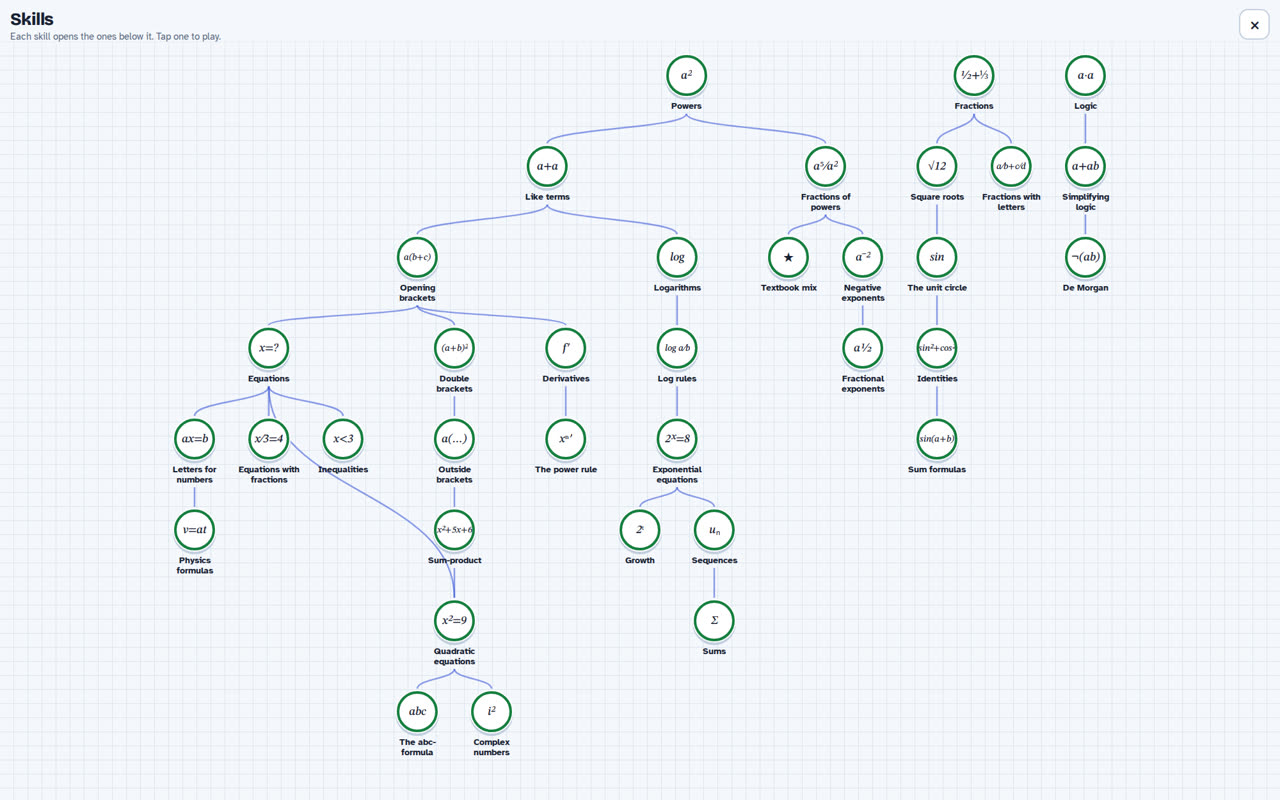
Today: the whole family tree of skills
Tending for quality
Playtest, then ask
Nearly every request after day one comes from playing a level and getting stuck or annoyed.
Bug reports with pictures
Problems written up as a published note with screenshots, then handed over as a link.
A net before the refactor
Golden hint traces for all levels, recorded before a single line moved.
Small steps on a branch
Nine refactor commits, each one passing the tests, merged when done.
An extensibility test
Logarithms were added as the proof that a new kind of maths now fits.
Words students understand
"Split" and "explode" became buttons that say what they do.