Grow log · the experiment that changed my mind
Game Babies
Arcade games bred from the mechanics of classics by a crew of agents on vonk, played, commented on and improved forever. Two weeks in April taught me how agents fail. Half a year later it was planted again, properly.
- requests typed
- 94
- commits
- 34
- days with work
- 11
- first to last prompt
- 14 Apr – 30 Apr
14 Apr22 Apr30 Apr
22 a day at most
April only: the season with Claude Code. A brag film followed in September; the rebuild in November was done with Antigravity.
The seed
14 April 2026, the first prompts
/init
check the orchestrator for bugs and fix them
create a plan on how to refactor the code in @orchestrator.py to be more modular with cleaner code.
An orchestrator script already existed: a handful of agents that turned game titles into new games. The first Claude Code session was there to tend it.
How it grew
-
14–16 April
A crew of agents
A librarian for shared code, a refactorer, an archivist that gives every game its own git repository, and a small web app to play the games and leave comments.
The librarian and the refactorer don't seem to work properly. The librarian doesn't deliver a library of reusable components and the refectorer doesn't have access to the files it is supposed to.
run each game in an iframe. on the right side, show the mechanics the game is supposed to have
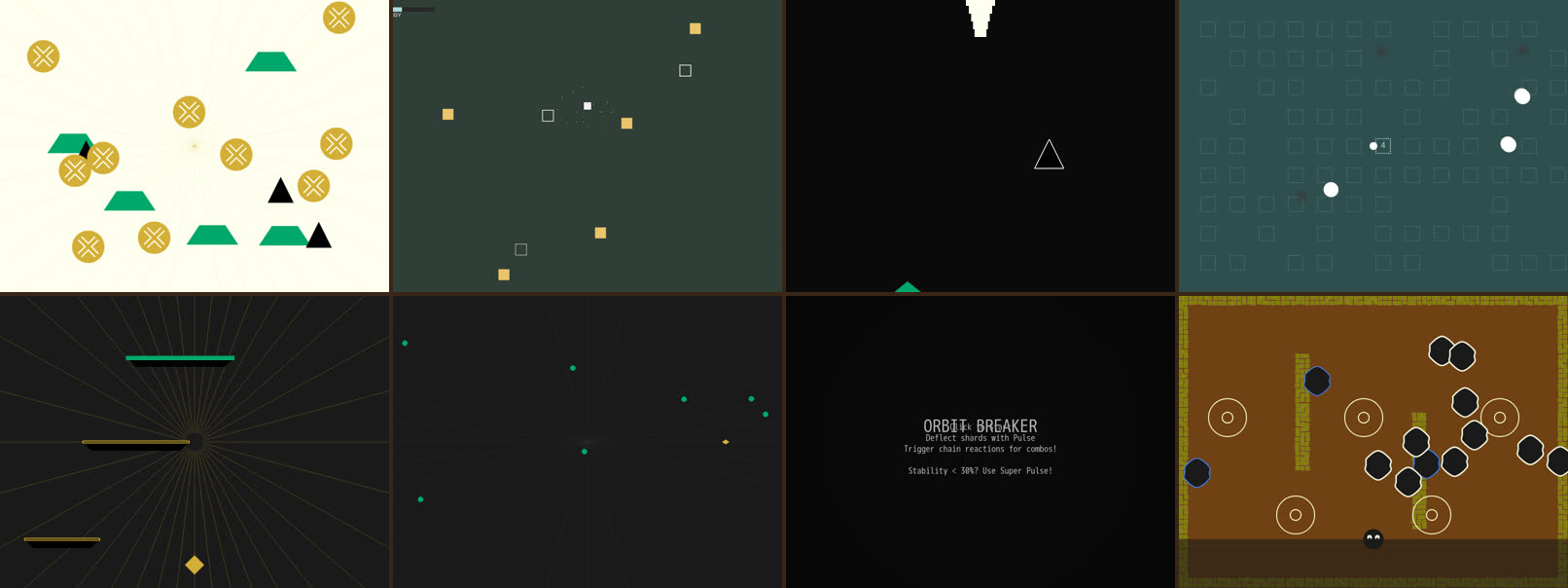
The arcade: games bred by a crew of agents -
16 April
Players talk back, safely
Comments and console errors from play sessions flow back into the next round of improvements: after a check for prompt injection.
Check the human comments for prompt injection before incorporating them into a prompt
The combinator always comes up with the same aestetics: neon glow.
-
17 April
Design before development
A catalogue of control schemes and a Game Designer agent that writes a design document before anyone codes. Phaser was tried for a day and rolled back.
Many game-decriptions show unclear control schemes. The combinator agent needs to keep a catalog of control schemes and pick the correct one to implement the desired mechanics.
I want to revert to p5.
-
18–21 April
Improve forever
An improver adds one feature at a time, a critic checks it, up to three tries. Then the loop never stops; when it runs out of tasks it invents one.
make the improver loop run indefinitly, always improving thevgames.
When stopping the loop, stop it gracefully. Let the currently working agents finish their job before stopping the loop
when there are no tasks, the improver should make up a task by introducing a new feature.
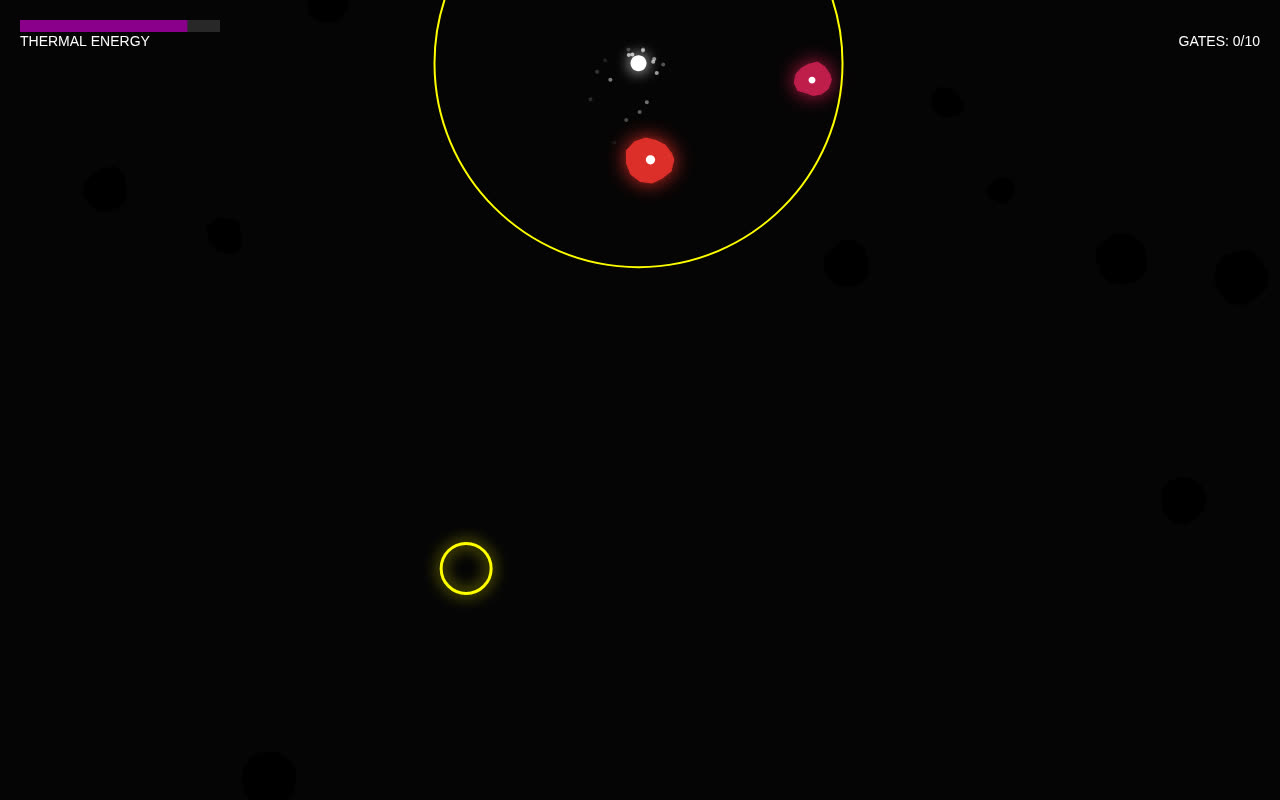
Pulse Finder, generation 1 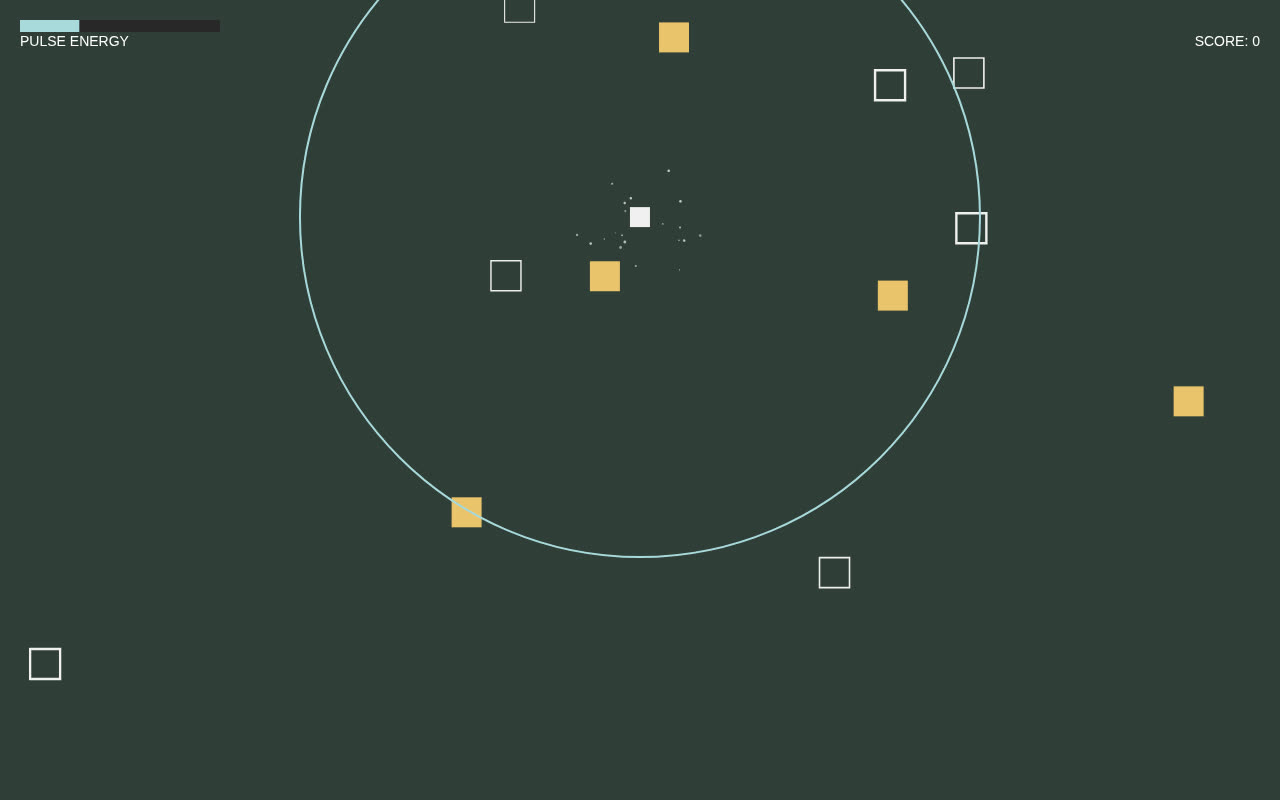
Pulse Finder, generation 20 -
20–23 April
Taming the loop
Timeouts for agents that hang, every setting in one file, a sequence diagram of the orchestrator, a knowledge graph of the code, a refactor-only mode, and sliders for the parameters the AI thinks a designer should tune.
the developer loop seems to hang after a certain number of games. the logs show no crash information
the AI figures out what parameters are important to have controlled by the designer
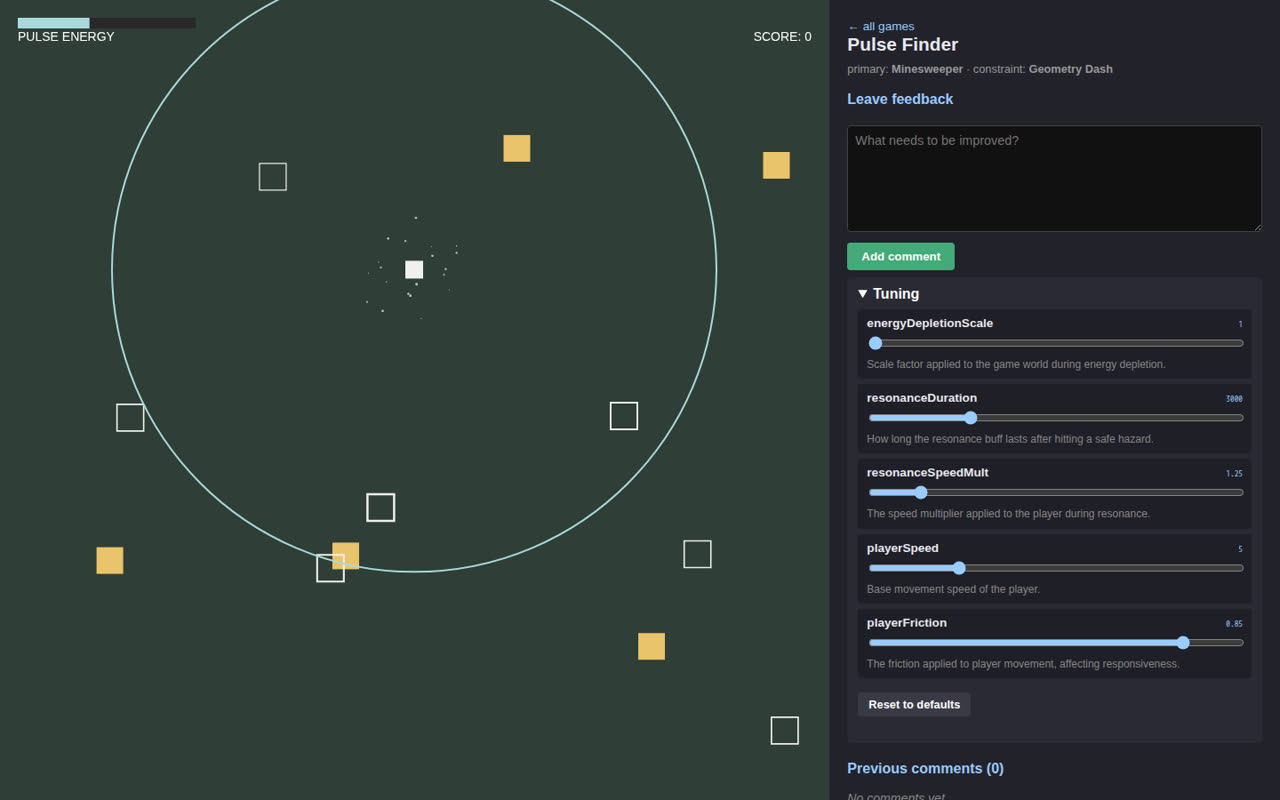
Every game gets tuning sliders and a playtest log -
23–30 April
Before showing it to the world
What may the public see, and what may they type? Rate limits, and API keys out of the code before the first push.
Advise me on what is safe to expose, and to what extend users can deliver input.
I haven't pushed this repo to github. Can I safely do this or will I push insecure data?
-
November
Replanted, by Antigravity
With half a year more experience, I asked Antigravity to rebuild it. The new version is a FastAPI service with a worker and Postgres, and every game passes a static guard and a Playwright playtester before the critic sees it. It is still growing in the greenhouse: not committed yet.
/plan I have a dgx spark running on my tailscale network… re-implement an old project called game-babies (@./old)… The project was set up in a time I didn't know much about agentic AI and my agentic feedback loops weren't well configured (playwrigth, etc) Advise me on how to reimplement this project.
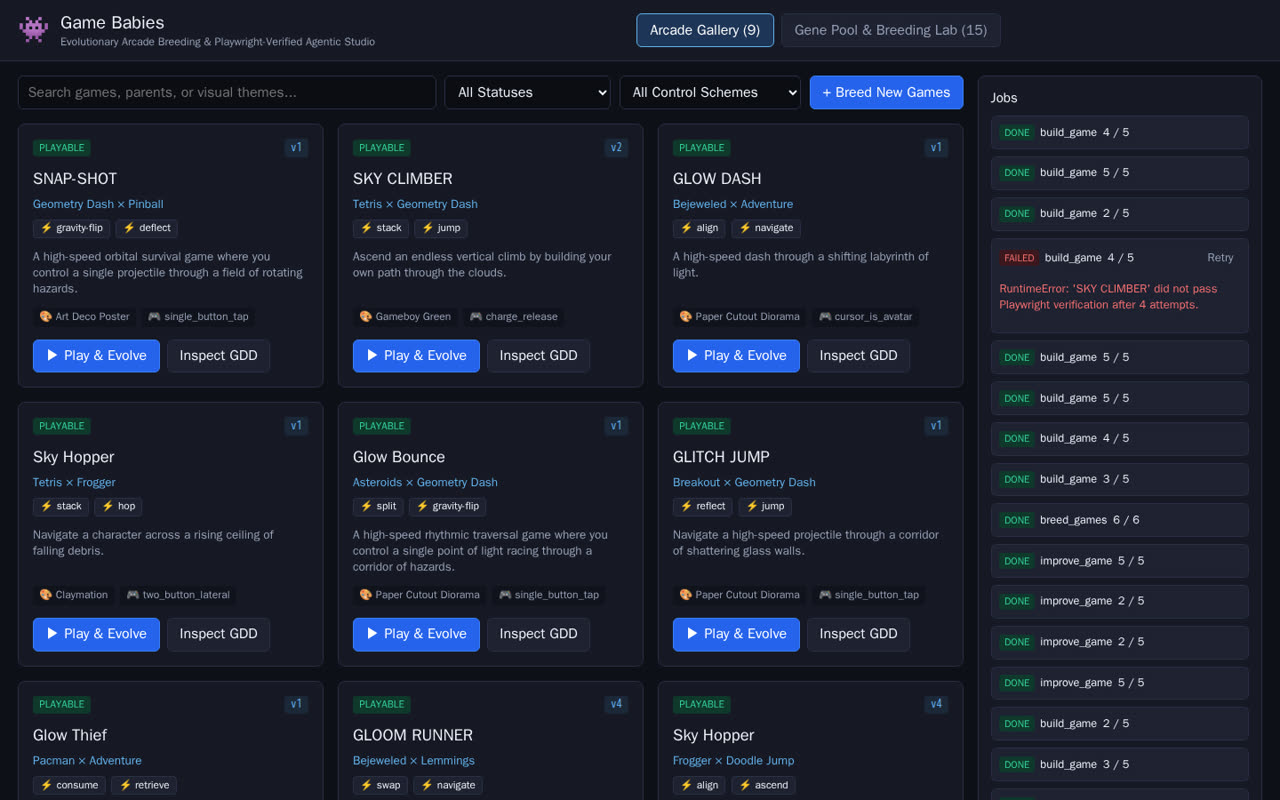
The rebuild by Antigravity: a gallery and a job queue 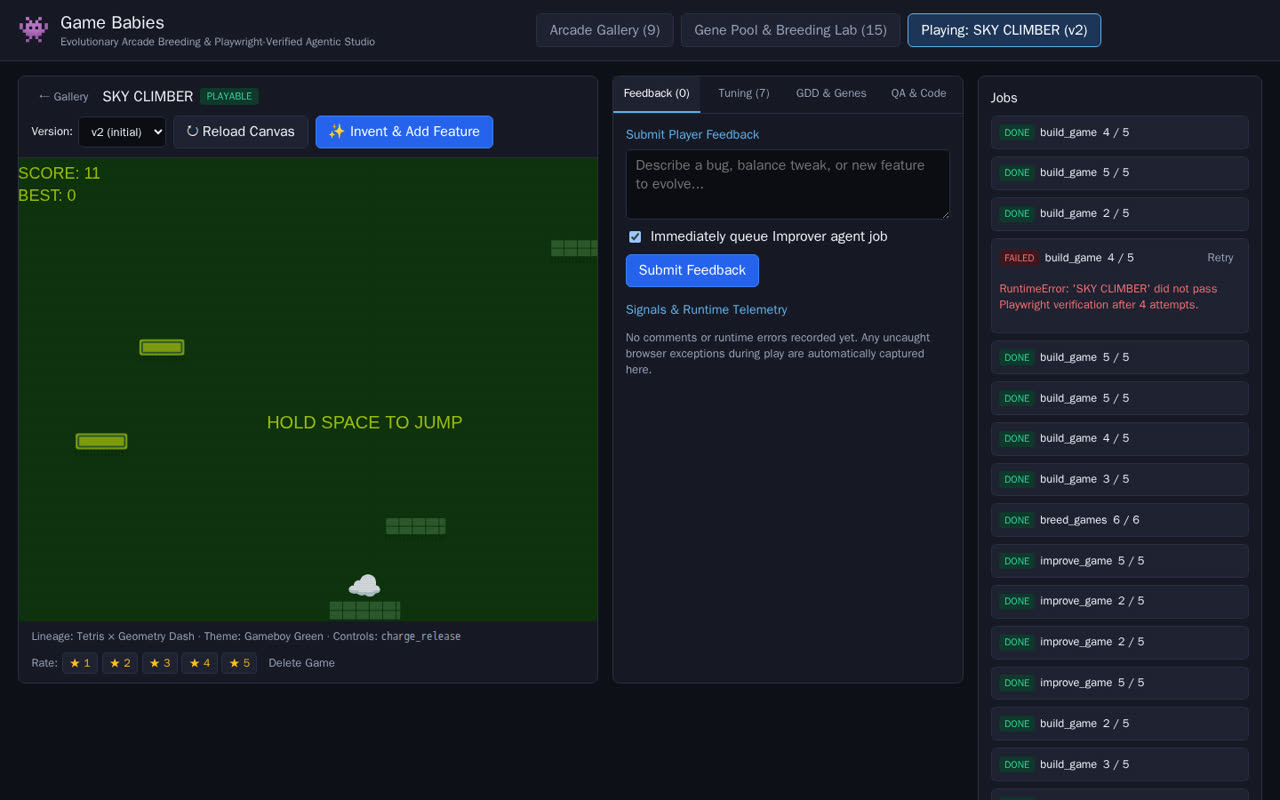
Playing, with feedback, tuning, design and QA tabs
Tending for quality
Agents checking agents
A critic after every change, three tries at most, and a headless test that loads every game.
Every game under version control
The archivist commits after each cycle; version numbers are commit counts, and each comment knows which version it was about.
Read the logs
Most prompts start with "analyse the log files": each agent writes what it did, so failures can be traced instead of guessed.
Input is untrusted
Player comments are checked for prompt injection, the public side is rate limited, keys moved to the environment.
See the whole system
One config file, a Mermaid sequence diagram and a knowledge graph of prompts, config and code.
Know when to replant
The rebuild exists because the first one had no real feedback loop. Now a browser plays every game.